Article
Why Rybakina & Sabalenka Are Building a Rivalry for the Ages
4 Min Read · September 30, 2026
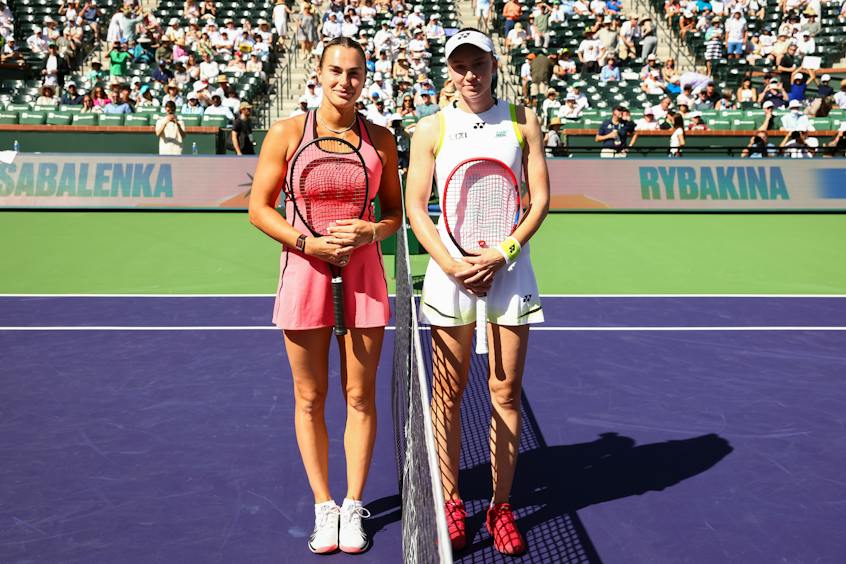
Elena Rybakina and Aryna Sabalenka have spent much of 2026 trading the biggest prizes in women’s tennis. And increasingly, they have had to go through each other to win them.
From Melbourne to Indian Wells, Miami and most recently New York, two of the biggest hitters in the women’s game have turned a long-running rivalry into one of the defining storylines of the season.
There has been little to separate them. Three of their four meetings this year have gone three sets and three meetings have been title matches including finals at the beginning and end of the Grand Slam season at the Australian and US Opens.
Perhaps no encounter better captured the fine margins of the rivalry than their March showdown at the BNP Paribas Open, where Sabalenka saved a championship point before defeating Rybakina 3-6, 6-3, 7-6(6) in two hours and 31 minutes to win her first Indian Wells title.
And there may yet be another chapter written at the Indian Wells Tennis Garden this November.
Rybakina, now the World No. 1 and reigning season-ending champion, this month became the first player to secure her berth at WTA Finals Indian Wells, which will bring the world's top eight singles players and doubles teams to the California desert November 8-15. Sabalenka soon joined her as the second qualifier, raising the prospect of another showdown and a chance to avenge her loss to the Kazakhstani in last year’s season finale in Riyadh.
Get WTA Finals Tickets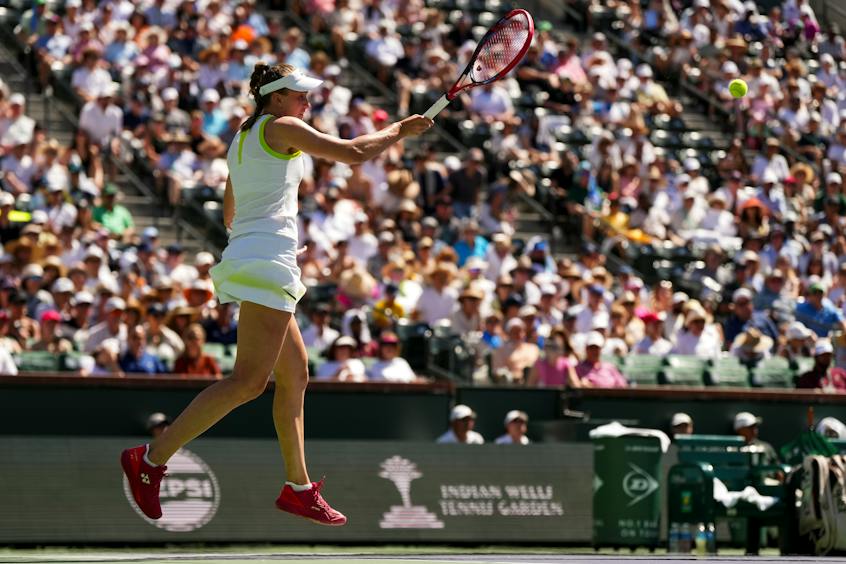
If they do meet again, there will be few secrets.
Their games are built around many of the same weapons: imposing serves, huge first-strike groundstrokes and a determination to seize control of points before their opponent can do the same.
Yet they deliver that power differently.
Sabalenka's tennis is more visibly explosive. She attacks with ferocious racket-head speed off both wings, using her serve, return and aggressive baseline game to take time away from opponents and seize control of points early. Rybakina's power can appear almost effortless by comparison. Her smooth service motion produces one of the game's most damaging deliveries, while her flatter, cleanly struck groundstrokes allow her to redirect pace with minimal fuss.
And then you have the difference in temperament. Sabalenka is loud, expressive, emotional and volatile. Rybakina is like an Ice Queen, rarely letting opponents and fans know what she is feeling on the inside, operating clinically like a silent assassin.
"For two players with such similar playing styles, their difference in comportment is as large as the gap separating fire from ice," writer John Wilmes recently observed.
When the two collide, points can resemble a heavyweight exchange in which surrendering even a few feet of court can be decisive.
“I feel like against Elena, it's always super-aggressive, it's all about the first few balls in every point,” Sabalenka said before their Indian Wells final. “It's very aggressive, very fast tennis.”
When the players arrived at the BNP Paribas Open in March, their rivalry had already produced one of the year's biggest matches.
At the Australian Open, Rybakina recovered from 0-3 down in the deciding set to beat Sabalenka 6-4, 4-6, 6-4 and win her second major title. During the trophy presentation, Rybakina acknowledged how firmly the matchup had become part of the sport's landscape.
“I just hope that we're going to play many more finals together,” she told Sabalenka.
Six weeks later they were doing exactly that in Tennis Paradise.
Rybakina arrived at the Indian Wells final having won their previous two meetings, including the 2025 WTA Finals championship match and Australian Open final. She then claimed the opening set against Sabalenka and broke immediately to begin the second when her rival threw in an ugly double fault.
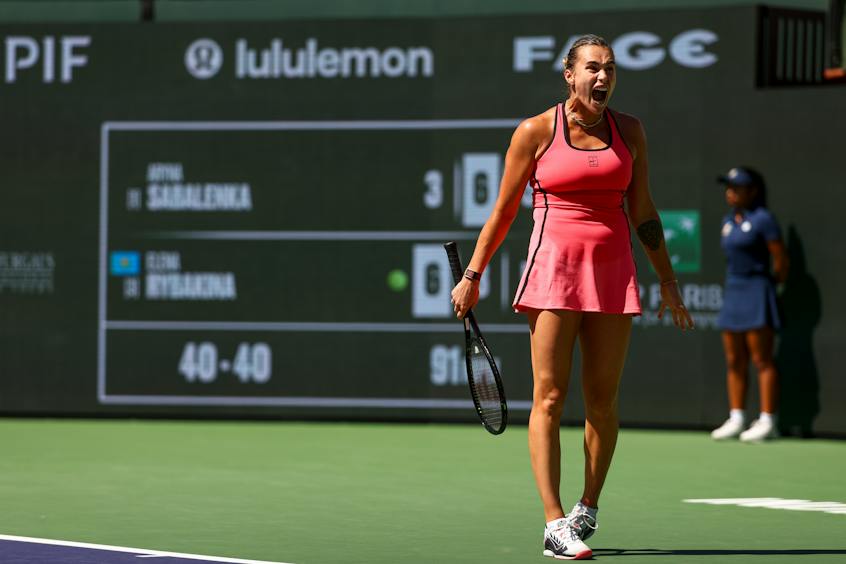
Sabalenka destroyed her racket on the changeover but then regained composure to immediately break back and force a decider. Sabalenka was tested again late in the third when she failed to serve out the match at 5-4 and then was unable to convert five break points in the next game.
At 6/5 in the tie-break, Rybakina stood one point from a second Indian Wells title. Sabalenka, desperate to avoid being the tournament runner-up for the third time in four years, refused to yield.
She survived championship point with a backhand exchange, forced an error on the next point and then closed out the title with an unreturnable serve.
“With so many finals that I have lost, they also teach me a lot of things that basically the game is never done till it's done,” Sabalenka said afterward.
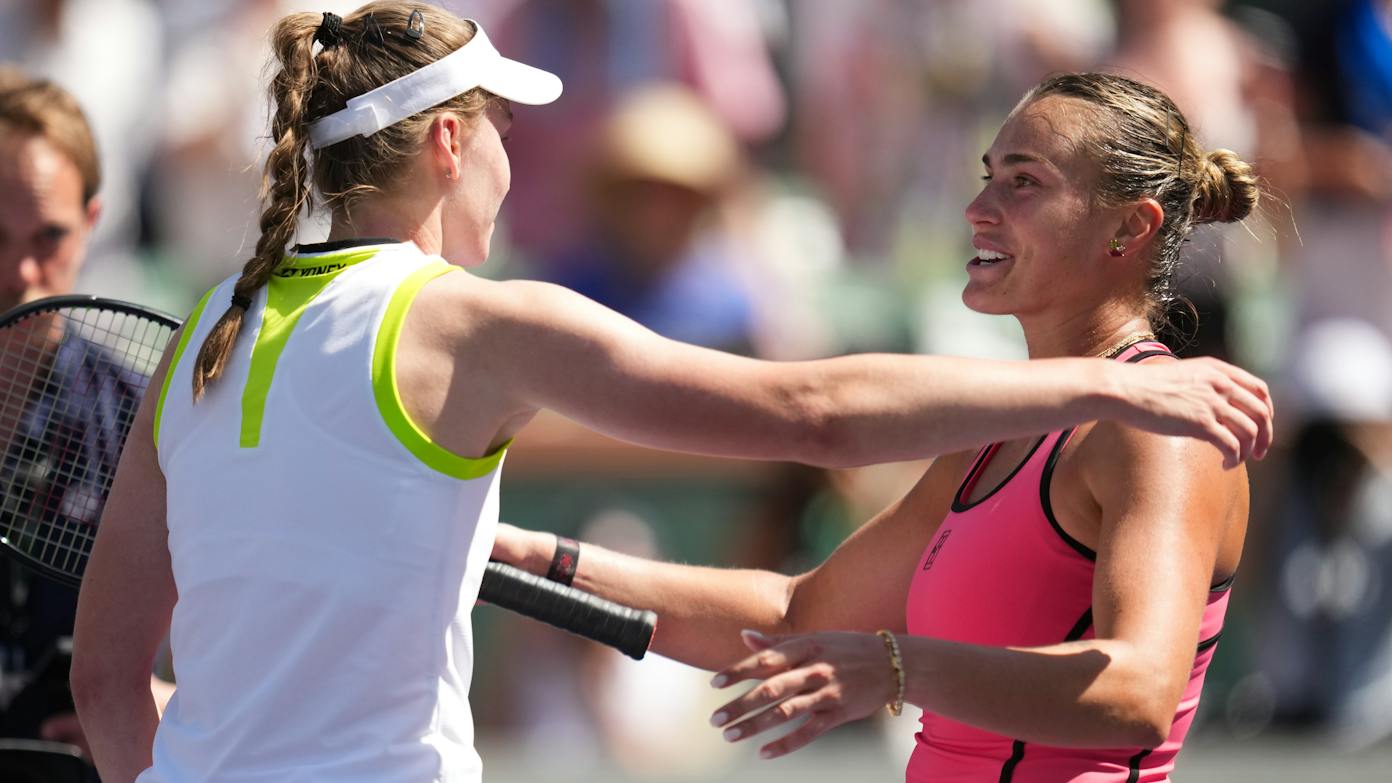
Less than two weeks later Sabalenka won again, this time 6-4, 6-3 in the semi-finals of the Miami Open, where she ultimately claimed the title to complete the Sunshine Double, just as Jannik Sinner did. “I really enjoy our rivalry,” Sabalenka said after that victory. “She's an incredible player, always pushing me to the limit, and you know, with her, you always have to bring your best tennis.”
Then the pendulum swung back.
At the US Open earlier this month, Rybakina defeated Sabalenka 6-4, 5-7, 6-2, denying the two-time defending champion a three-peat, collecting her third major championship and rising to World No. 1 for the first time after ending Sabalenka’s 99-consecutive week reign.
Before that final, Rybakina distilled the challenge of facing Sabalenka into a few sentences.
“She's a very aggressive player. It's difficult to play with her, mentally, physically, because she has a big game, big serve,” Rybakina said. “Most of the times it's a tight, tight score.”
That description could just as easily apply to the rivalry itself.
The margins remain tiny, the tennis uncompromising and, after four meetings already in 2026, neither player has been able to escape the other for long.
Get WTA Finals TicketsFor all the momentum Rybakina has generated in their biggest matches, Sabalenka still owns the narrow advantage in the rivalry overall. The pair has met 18 times at tour level, with Sabalenka leading the career head-to-head 10-8. On hard courts, however, the balance has now tipped the other way: Rybakina leads 8-7 following her victory at the US Open.
It is when trophies are on the line that Rybakina has enjoyed her clearest advantage.The 27-year-old has won five of their seven meetings in finals. That includes the 2023 Indian Wells final, the 2024 Brisbane final, the 2025 WTA Finals and, this season, the Australian Open and US Open. Sabalenka’s two championship-match victories came in the 2023 Australian Open final and this year’s unforgettable Indian Wells final.
Come November in Indian Wells, they may have to settle the argument all over again.