Press Conferences
Jessica Pegula -- March 3
5 Min Read · March 3, 2026
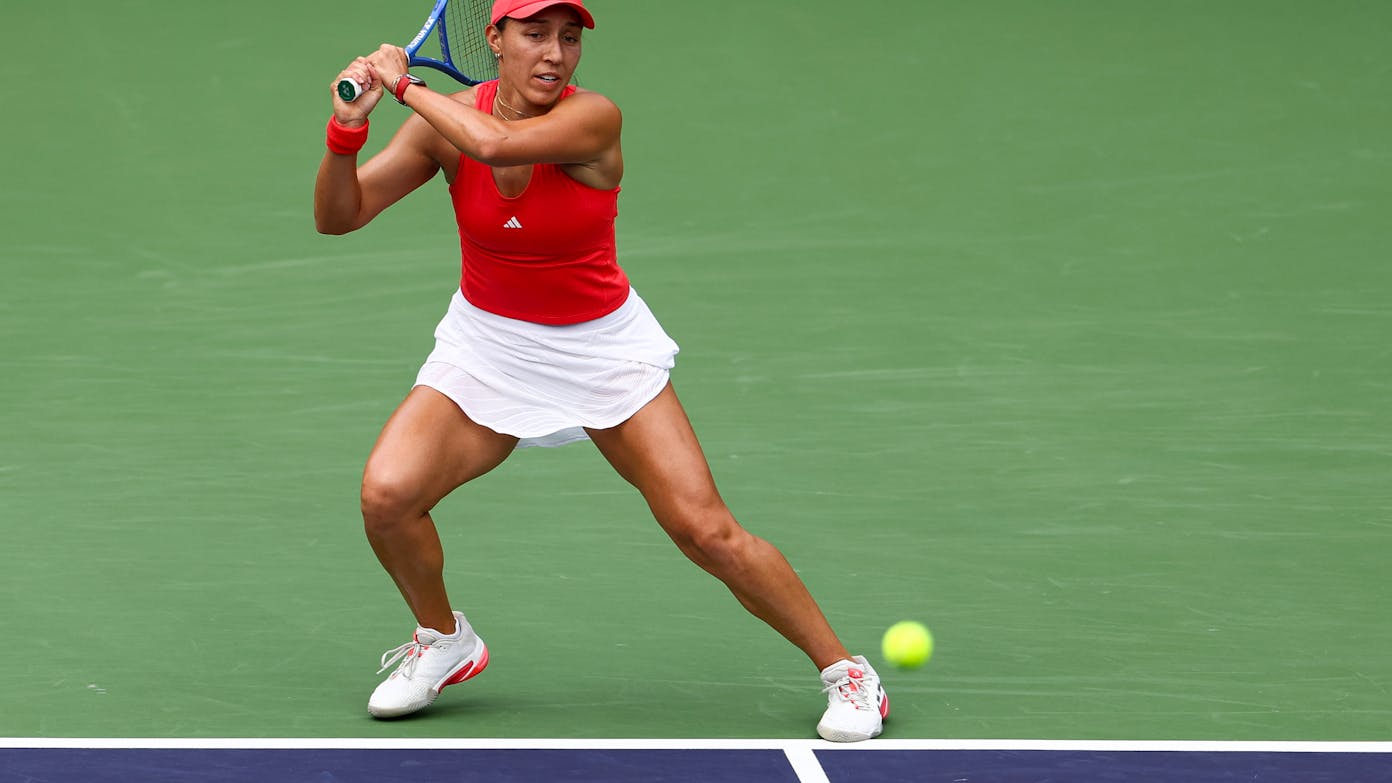
THE MODERATOR: Welcome back to Indian Wells. Just talk us through the past couple of weeks since you have won Dubai and how you're feeling.
JESSICA PEGULA: Feeling really good, happy to be here. Happy to be here after playing some good tennis a few weeks ago in Dubai. Hopefully I can continue building on that momentum, especially with such a big swing coming up.
THE MODERATOR: Questions.
Q. You talked about a big swing coming up. You were just announced on the new committee for the WTA, and you just seem to be someone who you take on all of these sort of leadership responsibilities, but you're also a pro athlete, you're also playing sport. How do you decide when to jump in and take these opportunities to sort of have a voice in this sport and also still focus on your tennis?
JESSICA PEGULA: I think it's something that over the last few years, I think maybe as you mature, you get older, you realize how important it is to give back to the sport. I think being on the player council has taught me a lot of the ins and outs of our sport and all the moving pieces. So I feel like if you really do want to make change, it's hard to do.
And so, I mean, really the reason I even was on the architecture council is just because I was asked by, like, three separate people, and I guess my name kept coming up with a lot of players and tournaments and stuff like that as someone that they thought as a top player would be a good voice for both, well, mostly the players, but voice of reason, I guess, with that bridge between the tournaments and the players and the schedule.
So, I mean, I think it's not something I'm always looking for. I think they just tend to come to me. But I'm very appreciative that players and other people think I would be a good fit for that role, and I think I'm at a point in my career where I'm happy to give back as long as my time isn't taking too much up of that.
I think there is a lot of help on that council, so it's not like it shouldn't be taking any more away than what I already do on council anyways, and there is a lot of other girls that are also on council that are there to help.
Yeah, I think it's just where you kind of want to spend your energy. And I do think it's good to kind of broaden your thinking outside of just competing on court and playing our sport, because there is so much more to it.
And I think you see that with a lot of really legendary, amazing players and champions that usually at some point they were kind of part of a change to their sport. So I think that's really important as far as leaving a legacy of, like, what you want to say that you helped accomplish.
Some people don't always want to do that, but I think to me it became something that was more evident maybe as I got older.
Q. Given your involvement in the inner workings of the WTA, what are your thoughts on the idea of women playing best-of-five sets? Do you think it is feasible to introduce that quickly, or is it something that has to be planned for maybe 10 years in the future to allow new players to train for that and to be used to it by the time they're playing in slams?
JESSICA PEGULA: I mean, again, I said before I don't really think we should have to. I'm honestly just not a massive fan of the three out of five, even with the men. And even though I know that there have been amazing three-out-of-five matches, I do think in three-out-of-five matches there is also a lot of those where guys throw sets because they're tired. If they get down a break, they tend to throw the set to get reset for the third set or the fourth set, whatever it is. They have told me that before. They have to reserve their energy in different ways.
You're definitely managing your energy much different, from at least what I have been told from the guys, than you do two out of three.
So I think that's something. I think we have amazing female athletes that honestly I think we could do that. I don't think it's the fact that we can't; I just don't necessarily think that we should.
Just on that aspect, I don't even know how you would schedule tournaments. We'd have to add weeks. We can't even get through the schedule now (smiling). So I'm not really sure for like a fan experience how that would really work.
Would you really want to sit three out of five of a woman's match, possibly go five, and then another five for a men's match that you really wanted to see? I mean, that's like ten hours of tennis, maybe not that long, but a lot of tennis sitting there as a fan. I don't really know if that experience would be enjoyable.
There is a lot of other variables that I don't think sometimes people are thinking about, or maybe a fan doesn't realize, because it would be a massive change. I don't think it's that we're not capable. I just don't really know if that's the best thing for the sport.
The only thing I could think of is like a quarterfinal on, maybe it switches to a three out of five. I don't know if the men would necessarily go to that, though, because obviously it would be a change for them. I also don't think a lot of men would want to wait for a three-out-of-five woman's match all of a sudden to have to play a three-out-of-five match, especially when you have back-to-back night matches, you have long days, if a court is moving really slow. All of a sudden that's another thing that has to get thrown into the equation.
There is a lot of moving parts. I think it would -- I don't think it would take that long to implement as far as us being ready to play. I just think that there is so many moving parts to it that it would definitely take a lot of consultation with the players, because it would be affect many different aspects of our sport.
Q. Do you think it might be detrimental just to the product itself? Because women's tennis is one product, men's tennis is another at the slams because you're playing different formats. Therefore, you do what the boys do, and if you could do it as well as they do, it may be good? That sort of attitude?
JESSICA PEGULA: Yeah, that's the thing. I don't know how it would have to be rolled out to where it would still help our product. Is it only semifinals and finals where it's separate, you have time to schedule? You can play it on maybe a different day? I don't know what that entails where it still feels like it's helping the sport.
From first round on, I don't really think it's great for our sport. For a fan, it just seems like it's going to be a lot, and the scheduling and for the players, I just don't know how it's even feasible. So I think it just depends on how you would kind of roll it out.
Q. In terms of your position on the sport, obviously you seem so much more comfortable as a top-five player perennially than you were in the beginning making your way up a few years ago. Do you isolate a moment or a time when kind of the imposter syndrome maybe started to melt away and you really did kind of embrace the fact and own the fact that you were a top player?
JESSICA PEGULA: I think maybe -- I think, I don't know, it's hard to say if I could pinpoint. I think that when I came, I had a rib fracture the year I missed the French Open and then went on to have a really good run in the summer, made finals of the US Open. I think that run definitely helped me a lot as far as solidifying myself as a top player, because I was someone who was so used to having to play a lot of matches, where I felt like if I wasn't really playing, that I was really falling behind and I wasn't quite sure not playing for two or three months if I was able to come back right at that level.
Being able to kind of prove myself wrong a little bit in that swing, and, you know, miss a big chunk of the year and come out and play just behind Aryna, have the best hard court season of the year, I think gave myself a lot of confidence that I'm a really good player, and I don't necessarily need the matches or even just like putting in, because I was hurt, tons of hours on the court to really prove that's where my confidence was coming from.
Because I think a lot of my confidence was coming from me just working really hard and playing lots of matches and getting lots of wins, which is great, but it doesn't always work like that obviously.
So I would say that kind of swing, yeah, I think it proved myself wrong a little bit, and now I feel like I don't have to train as much, I can train a lot smarter, I kind of am more efficient with what I need to work on, and I don't get anxiety or anxious about not putting in that time and feeling like I still can't go out there and play good tennis.
Q. You're playing the mixed doubles event. What do you like about the format? Is it a way to get the casual fan drawn in perhaps?
JESSICA PEGULA: Yeah, I think we have seen that over the last couple of years as all these mixed doubles events have come out that it is a great way for fan engagement. I think it's, if not the only sport where men and women are playing against each other on the same court, I think that's something that's really unique about our sport and something we should keep embracing to bring fans in and draw fans in. It's fun.
I think you see different personalities come out with different pairings. You see who meshes well together, who doesn't, and just a different aspect of our sport, which again, is just having the men and women both socializing, working together, competing against each other on the same court is something so rare in sport.
I think that's something special that we have that it seems like more events are starting to do that.
Q. You said at the AO that you felt like you were a top-three hard court player on tour. This hasn't been the friendliest place for you overall. Are you approaching it differently this year? Do you feel like the thin desert air and grittier courts don't match up with your game that well?
JESSICA PEGULA: It's always been really tough for me here. I never feel like I play good tennis. I think I had one good year I made quarters, but yeah, it's always been tough.
I think it's one of the tougher tournaments, honestly, to win because of how drastic the conditions can change from morning to night, windy, cold, hot, dry. It's very wide variety, and I think you have to be able to adapt really well.
But I do think that this year I feel a little bit better with my game as far as being able to adapt and have a couple more tools in the toolbox to help me combat those types of conditions.
So yeah, I think this year I'm kind of looking forward to the challenge of seeing if I can get over that hump a little bit here and see how far I can go. Obviously it's going to be tough. I have a pretty tough section. Day by day, again, the conditions change, things change a lot here.


