Press Conferences
Jessica Pegula -- March 11
3 Min Read · March 11, 2026
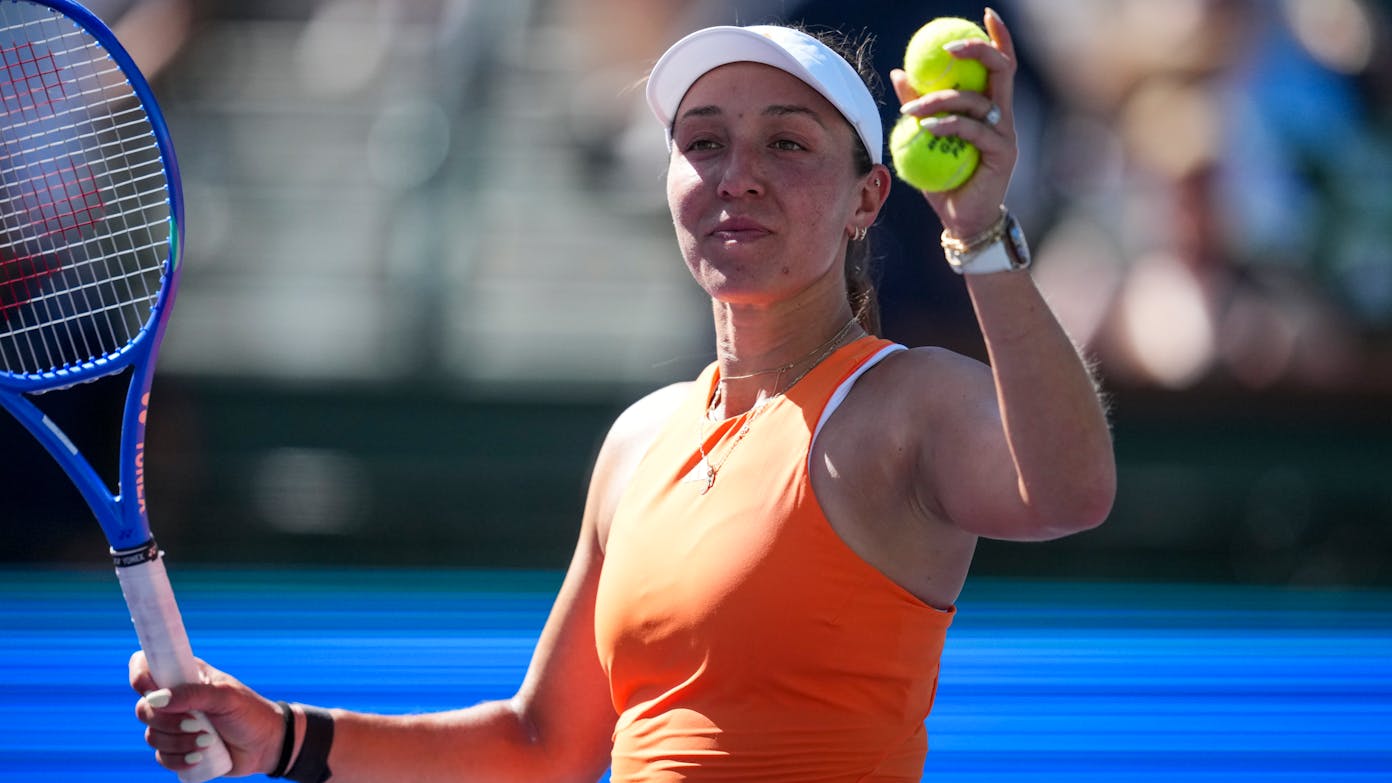
J. PEGULA/B. Bencic
6-3, 7-6
THE MODERATOR: Jess, great battle out there today. Welcome to the quarterfinals. Give us your thoughts on your performance.
JESSICA PEGULA: Really happy with today, being able to turn around my pretty poor record against Belinda. So, you know, when you're able to figure that out and get over that hump, it's always a good feeling.
Just excited that I was able to, yeah, accept that challenge and figure it out.
THE MODERATOR: Questions.
Q. The elements seem pretty tricky here between the slow court, the thin air. How do you go about managing that?
JESSICA PEGULA: It's really tough. You know, center is a little bit slower, I would say Stadium 2 almost feels faster, some of the side courts feel faster, some of the practice courts feel slower. And that's just the variance I think tournaments always kind of have because they're laying down the courts at different times and different days.
We're kind of used to that, but I think with the thin air and the fact that it can get really hot here, but then also get to cool and get very windy, is really tricky. It's hard to control the ball when the air is really thin and dry, but then the court feels sometimes slow.
It's just tricky. It's one of those things I think we all kind of struggle with, and you're just trying to do your best out there to figure out, you know, and adapt and try to figure out how to play your game without, you know, overthinking it.
Q. Do you think that's tricky for you and Belinda? Both are pretty flat hitters, so there's a pinpoint quality in how you hit the ball. Was that tricky today in this matchup?
JESSICA PEGULA: A little bit. I felt pretty good out there today. I think it did get a tiny bit windy with the wind. It was a little tough serving against the wind, especially because we return so well, so when we were kind of sitting on returns and hitting our spots and moving forward, it was tough to defend on that side.
But, you know, I think she's had some pretty good results here. I haven't played horrible here, but maybe not one of my better tournaments of my career.
Yeah, I don't know. I think it's more just learning how to figure it out and depending on what time you play and the matchups that you play on certain days and how the weather is.
Q. Don't take this the wrong way, but you're the oldest player in the top 5, top 10, top 30. I'm really curious, though, because it seems like you're still evolving, still growing. They were talking on the broadcast you're getting to net more often, your game is changing, you're evolving like the young players are, still growing, but you also have experience. Can you talk seriously about the pros and cons being where you are in your career and being elite?
JESSICA PEGULA: Yeah, I think I have said before too, I was so injured for, like, my early 20s that I do feel like in a way I don't have those years kind of added onto my career. I wasn't really on tour playing that much from maybe 20 to 24.
I had a couple of surgeries, I was rehabbing, I was hurt. So I do feel like not having those years on me maybe is why I don't necessarily feel old (smiling).
But I think right now I'm just very open to learning, I'm always very open to trying new things. I think one of the strengths I have as an athlete is probably being able to change something and implement it very quickly.
I think that's something too even my coaches now have kind of seen over the last couple years. I was very open to trying to figure things out, how do I get things better, watching other players, watching what players do really well, and trying to implement certain things into my game and seeing if I can do the same thing.
Sometimes that can be scary I think for coaches because they don't necessarily want to change too much, you don't want to change your game completely and then be upset when it doesn't work out.
I'm definitely one where I can pick up things very quickly, and we have been able to change some things that aren't major that maybe the fans or people can't necessarily exactly pinpoint.
But it's definitely stuff we have been working on, and I have been able to implement it into my game over the last couple years really quickly, and not afraid to kind of fail and try different things, whether it's with my serve or my forehand or my slice or different strategies.
I think that, in a way, has kept my brain kind of just always working and problem-solving. That's just how I play my best tennis, that's how I feel like I'm getting better, that's how I enjoy playing tennis. I always want to feel like I'm learning and I'm trying things.
I never want to feel like when I retire that I wish I would have tried this on my serve or this string on, you know, this racquet, or whatever the case may be.
I think that's probably my strength as a player and just how I kind of look at, you know, my career and how I'm still improving, even at my age (smiling).
Q. Speaking of those changes, talking about today's matchup, what was different about today than the first four times you faced her? Did you play the same way but you're just a better player obviously now, or were there actually some tactical adjustments that you feel made a really big difference?
JESSICA PEGULA: I think I'm a much better player now, but I also think that tactically I definitely changed some stuff. I serve much better now, which helps me out not feeling so much pressure with her returning, because she's a really good returner.
I think tactically I don't want to totally give away what I have been doing, but there was definitely some stuff that I have seen that I've gotten better at that I'm able to adapt to in a point that I'm able to just think a little bit clearly and more quicker out there.
That just, I think, helped me get the win today. It wasn't anything crazy, but I do feel like there is a certain way and a certain pattern that maybe worked better that I wasn't thinking about the last few times I played her.
Q. I want to go back to the subject of the conditions. You talked about how the surfaces and the feeling of balls are different, depending on the daytime, nighttime. Your play style, you're good at using your power on the opponent and taking the ball really quick, earlier. Because of that kind of play style, do you think that adjusting that kind of condition is more important than as a player like Sabalenka or Naomi or these kind of power players? And also, are you thinking about adjusting like tension of strings, depending on the kind of situation?
JESSICA PEGULA: Yeah. I think that probably the slower conditions, it does probably favor the bigger hitters, that just have more pure, strong power, because they're able to kind of hit through a slower court or slower ball. You know, I think that maybe has always been a little bit tougher for me, but that's something I have tried to improve and get better at.
But at the same time, I really love a hot, fast hard court where sometimes maybe the bigger girls don't like my flat ball. So I think it goes both ways.
Obviously, you play a lot of night matches, especially when you're a top player and you play bigger matches on bigger stadiums and you have to be able to get better at that.
I was happy with how I played my night match the other night. If I'm night match again, it's just again another challenge that I kind of need to figure out.
It's always tough, too, when I play night match, I'm usually playing against a pretty good player, so it gets tougher and tougher every time.
What was the other question, the...
Q. The strings.
JESSICA PEGULA: The strings. Yeah, I definitely can be very picky with tension. I used to not kind of change it that much, but now I change it all the time. I get, like, three or for different tensions, and I definitely am someone that can feel a lot with the racquet.
So maybe because I do play a certain way, it's a lot of timing, it's a lot of my, like, hands and coordination, that type of stuff. I definitely feel changes in tension with the weather. Certain racquets, too, if you play with them a lot, they get more dead, some are more lively, some take the tension differently.
So I can be super anal with it, but I have been trying to be better at not being so obsessed with it and kind of figuring it out. But it is something that I always look for just because you want to get the tension that feels the best, and if that's what makes you play the best, I think there is nothing wrong with trying different tensions. If one feels better than the other, then why wouldn't you want to do that.
That's something I have played around here and every tournament. I think here it's a little bit more tricky, like you said, because of the temperature changes, that can change the tension a lot. So I have always gotten a little bit better at keeping a lot of different tensions.
I can feel right away if I don't like it or not, so then I'll just change it and find something that maybe feels a little bit better, even during a match.
Q. As one who likes and stays interested and compelled in the sport by changing a lot of things, not a lot of breaks in the season, we have the offseason, does tinkering have a downside and there have been times in your career when you've overdone it and it's gotten you out of rhythm?
JESSICA PEGULA: Yeah, I mean, last summer I tried to play with gut in the mains, and I lost in Toronto and Cincinnati and played terrible. I was hitting every ball in the fence. You definitely learn.
But the problem with tennis is, like you said, is there is not a lot of time to tinker. Sometimes something can feel good for a couple of days, but then you put yourself in a match situation with pressure, your body, I mean, especially us at this level, we play so much matches and you play so many pressure points and pressure moments, and you hit the ball a certain way, and then all of a sudden that's different. That can be really hard to adjust to.
I have always been someone again, because I have a lot of feel with my racquet and my tension that when something does change, it is a little bit hard for me to adjust.
So I usually, I tend to keep things, I always go back to what I usually used to do, as far as that stuff. I haven't changed much with my string or my weight and balance with my racquets for a really long time.
But some players are a little bit better at doing that. They will just change their weight and play with it different one week and see how it feels. I think it really just depends on the person, but that is what makes our sport so hard, is there isn't a lot of time to kind of tinker.
I try to do it in the offseason, and I try to change, you know, maybe some weight and balance, but then it takes a week to get it done, and you get your racquets back and it takes a week to try it, at least, or two weeks, really, and then you're like, oh, my offseason is done, and then you're like should I really start Australia with this racquet? I don't even know if I really like it, and then I just end up going back to my old one.
It's definitely not a lot of time for me, at least. I think some players are a little bit, you know, change things more.
Q. Your consistency has been remarkable. Eight straight quarterfinals. Really, in general, last several years, you have always been deep in slams and big tournaments. What do you chalk it up to? Something you have a sense of pride in?
JESSICA PEGULA: I think so. Yeah, I think before, it used to be kind of, like, maybe I didn't win, I'm not winning all those tournaments and stuff, but I think it's just as hard and challenging to be that consistent as it is just to like one off and win one tournament a week.
Even though obviously you play to win tournaments, I do think I have taken a little bit more pride in how I'm able to show up every single match week in, week out, and be able to be right there every single week.
I want to keep going further in those tournaments and further here, but I'm not really sure what it is. I think I don't have a lot of highs and I don't have a lot of lows. Whenever I do, I think I snap out of it very quickly, and I get back to work and get back to working on things and improving things.
I enjoy that process a lot. So I think maybe that keeps me mentally a little bit more fresh week in and week out.


