Press Conferences
Jessica Pegula -- March 9
3 Min Read · March 9, 2026
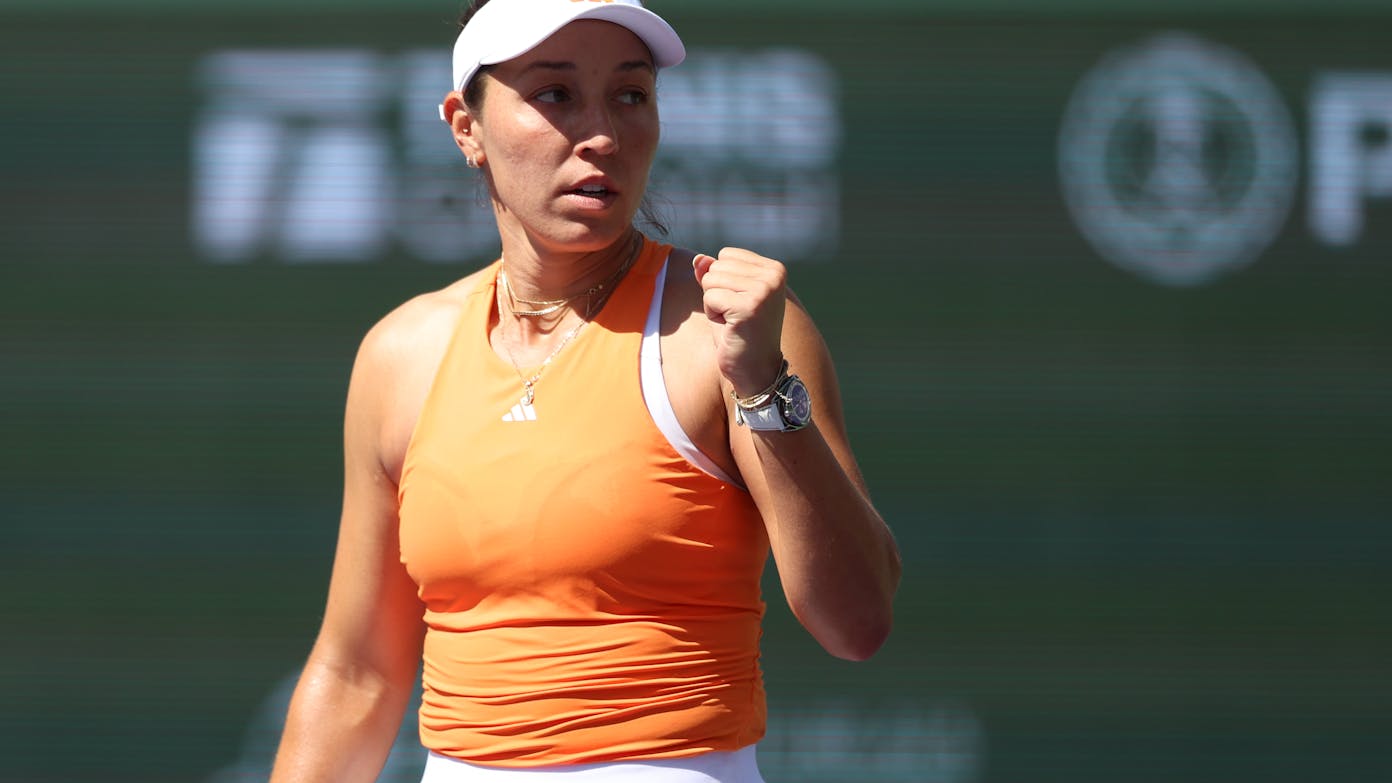
J. PEGULA/J. Ostapenko
4-6, 6-3, 6-2
THE MODERATOR: Jess, congratulations. What did you do really well to bring it back up after that first set?
JESSICA PEGULA: Yeah, playing Jelena is always really tough, can be very frustrating with the way she's able to hit winners and take time away. Yeah, can be really hard.
So luckily I was able to just hold onto my serve there in the second set and find chances to break, but yeah, it was really tough.
To be honest, I didn't think I really played that bad at any point. I actually thought I played pretty well throughout the entire match. If anything, was able to kind of pick up my level towards the end.
THE MODERATOR: Questions.
Q. There was a clear distinction the way that you were composing yourself on the court today versus Jelena when things were getting a little squirrelly out there. Do you feel that sense of calm? You looked really calm. Do you feel that way? How important is it for you to stay composed in those moments?
JESSICA PEGULA: Yeah, I think I was a little more animated than I usually am today, probably in a negative way of just showing some frustration, especially early on, because I could tell she was playing well, and I was just kind of, like, here we go again, I'm going to have to do this again. I was maybe hoping she started off worse.
I don't know. Maybe I could have gotten it in two sets, but yeah, I mean, I'm not that animated. So even when I feel like my attitude is really not great, people don't really notice it that much.
But I think today was a little bit, and I had to kind of snap myself back and kind of lock in to not let that get away from me, because then obviously it starts to affect everything. I kept telling myself I wasn't actually playing bad.
It's one thing you're frustrated you're not playing well. I didn't think I was playing bad. I thought I was playing pretty well. It was just letting a couple chances, couple breaks here and there, maybe a couple shots that I could have been more aggressive on.
So I think just having to check myself at a certain point in the match, for sure, just to kind of make sure I was still thinking clearly and not really getting, you know, run over with emotion.
Q. When you're preparing to play Ostapenko, is there a specific mindset that you try to get into, specifically for an opponent like her, because you can anticipate some of this? How do you approach that mental strategy?
JESSICA PEGULA: I think you have to kind of go in knowing that she can come out playing really well or at any point play really well, but then you also know sometimes she can go off, because she plays very high risk.
You just kind of hope, a lot of hope that maybe she starts off not great and you can kind of jump on it early and maybe kind of get that lead, or, as my case today, I think she came out playing some really good tennis. It took a little bit for me to find some holes there to luckily pull that out.
I mean, I think you go in with your strategy, you go in having to feel out a little bit how she's starting the match, how is she playing, how are you playing, and then I think you adjust from there.
Yeah, for example, today I think I knew she came out playing pretty well, and I knew I was going to have to kind of dig in and find my chances, you know, when they came.
Q. As a player with your experience and higher ranking in this sort of situation, do you feel a difference when you're playing someone early on in a match and they can swing freely, but then as it gets to the business end, do you feel that from the other player that maybe things are getting a bit tense?
JESSICA PEGULA: I can feel, I think, quite a bit whether someone starts off good, someone starts off nervous, someone gets nervous towards the end trying to close it out, someone frees up because they're down.
I think you can really feel those momentum swings, and I think that's something that you can't quite see when you're watching, or maybe you can, but especially on TV it's maybe a little hard to feel the momentum swings.
But I do think as you gain experience and you get in those moments and you become a better player, you can really kind of feel momentum swings a lot. Even when they're about to come, if you stopped a momentum swing, you know, there is definitely ways that a match kind of moves where I feel like you can, I don't know, you have like your, like, I don't know what the word is, but you just, you kind of know what's gonna happen.
Q. A sixth sense?
JESSICA PEGULA: Yeah, you have like a sense, I think your finger on the pulse a little bit of how the match is coming about or what big points are, big moments are.
I think if you played, some commentators can kind of pinpoint those moments from watching, but I think for maybe sometimes a person that hasn't played tennis or it's just a fan, you don't quite realize it as much than if you're a player.
Q. Do you think there are misunderstandings sometimes of pressure and that sort of thing?
JESSICA PEGULA: Yeah, I think that's something that fans, maybe, because if you haven't really played or played at a high level, it's something you don't really know. That's why you hear commentators or players or people that have talked about it, it's definitely there. Like, you can feel when a momentum is about to switch, when there is big points, maybe you got a little lucky and then they kind of flipped. I think you see that in a lot of sports.
But in tennis, at least for me as a top player, I'm super aware of that, and I think it definitely comes into play and it kind of dictates how you play certain points, as well.
Q. It's going to get significantly hotter later this week. Can you talk about the court conditions and the weather conditions and the challenges with the warm days, cool nights, and the occasional wind, maybe if you have a preference at all?
JESSICA PEGULA: Yeah, I played one match at night. It was fairly cool. Today it was really nice out, to be honest, just kind of a nice day, not overly hot.
I was here the first few days where it was pretty hot, 90-plus. It definitely flies and plays much faster when it's hotter. When it's cooler, it kind of slows down a little bit the conditions.
So I usually like playing in a more hotter, faster type of environment, and then obviously we have the wind too. Sometimes it can get really windy and that definitely plays a part. It's just tough. You always have to adjust and kind of adapt day to day.
Yeah, it's something that I have been trying to get better at myself, so I prefer more of the day just because we're practicing more during the day, so I think I'm just more used to it.
Q. Can you talk about your next two potential opponents?
JESSICA PEGULA: Yes. Mertens and Bencic, right?
Tough opponents. People, to be honest, that I don't have a great record against and I've actually really struggled against. I don't think I have won a set off Belinda yet. That will be a challenge for me.
But I think I have come into this tournament, when I saw my draw, and my results here haven't been my best tournament, so I have taken every single match as a challenge and I think I'm looking forward to that either way. We'll see what happens and who I end up playing.
Again, I think I have become a much better player over the last six months, and I'm excited to kind of challenge myself to hopefully overcome either one of them who I know will be really tough, and they've also had some really good results here, as well.
Q. You talked about you're a better player in the last six months. Do you have any specific techniques that you use to, as you said, like, mentally get yourself refocused in the game, just to make yourself really aware of the swings during the match? Do you do anything special, or does it come with experience?
JESSICA PEGULA: Yeah, I think it's both. I think some of it is experience of being able to just settle in and know that you just have to keep playing each point, point by point.
I do think there are definitely some things I focus on like covering certain serves, trying to serve well, whatever, you know, if it's serving wide or serving T or hitting your spots a little bit better. I think when you can hone in and focus on certain things, everything else gets a little more quiet and you're able to just focus on one thing at a time.
I think when you're starting to get a little emotional or frustrated, that's something that can kind of just reset you and bring you back, because at least for me, at the end of the day, when I play well and I get out of a tough match like today, it's because I'm thinking clearly. Even if I'm in trouble, I'm thinking about what serves to cover, where to hit certain shots, where I should serve, where the first ball should go.
It doesn't always work, but I think when you can focus on that, it just allows yourself to take some pressure off and play a little bit more freely.


