Press Conferences
Novak Djokovic -- March 9
3 Min Read · March 9, 2026
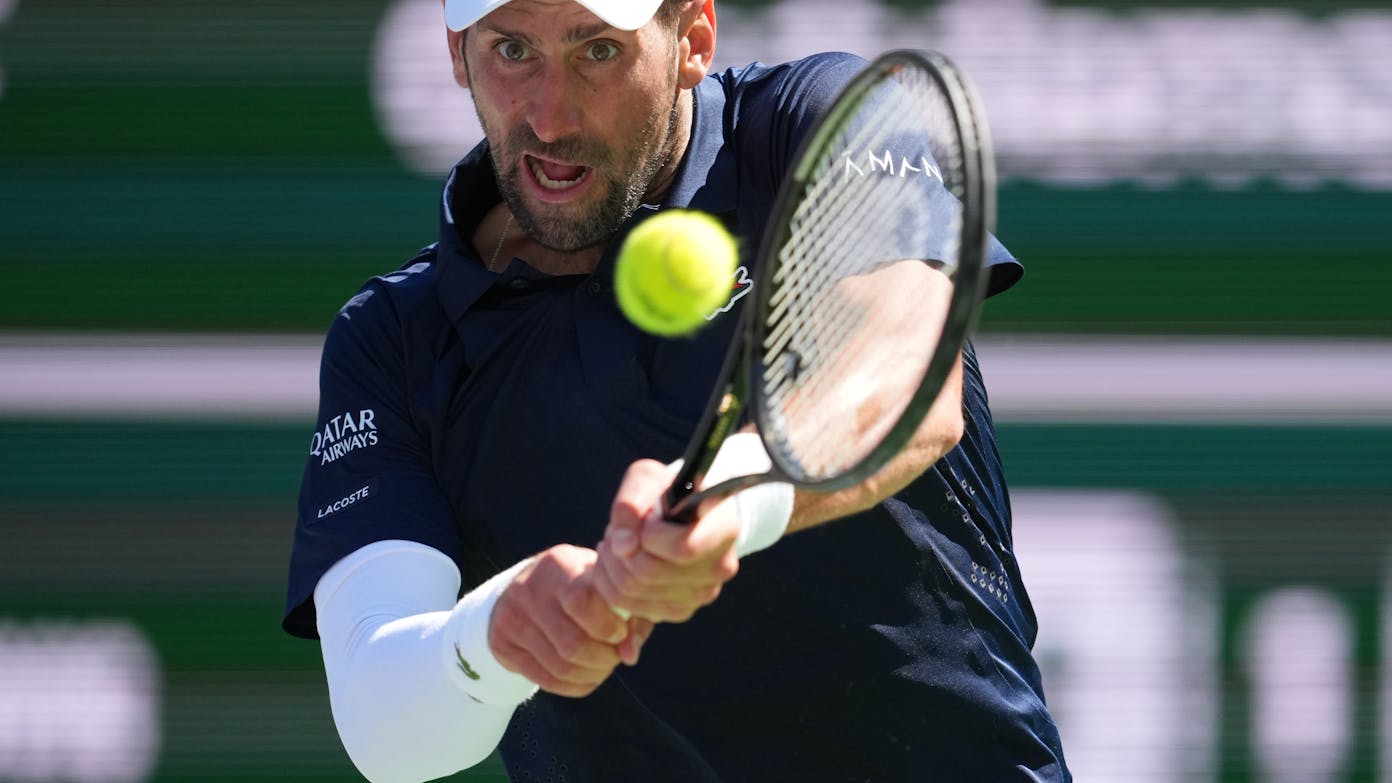
N. DJOKOVIC/A. Kovacevic
6-4, 1-6, 6-4
THE MODERATOR: Questions.
Q. I wanted to ask you where you think tennis is now in terms of equality between men and women and how much has that changed in the 20 years you've been involved on the tour?
NOVAK DJOKOVIC: Men and women? In which way? Sorry.
Q. In terms of scheduling, prize money.
NOVAK DJOKOVIC: You want me to compare the tours? I don't understand exactly.
Q. No, no. I mean do you think equality has been achieved? Do you think women's tennis is kind of still the world leader compared to other sports, as well?
NOVAK DJOKOVIC: Well, it's not what I think. It's the fact. Women's tennis has been by far the most successful, I guess, global woman's sport and also most paid, so it's great to see that.
I'm happy for that, and I'm proud of that. I think it's in a good place.
Q. A match question. Tell me what you thought of your opponent's level today. And how satisfying, or do you take any pleasure with players of Serbian descent around the world coming up, probably inspired by you?
NOVAK DJOKOVIC: Yeah, there's not many of us. It's nice to see Aleks, who I really like as a person, who I get along very with him, that he has the Serbian background, his entire family.
Yeah, we get to practice a lot. We get along very well on the tour. We haven't faced each other, I think maybe only once in clay before today's match.
I watched a little bit of the highlights of his matches in this tournament, and I thought he just felt the ball very well. I mean, he was striking the ball great.
Today, I don't recall really facing someone who is not that tall -- I mean, he has a decent height but not really tall -- to be able to serve, you know, that well and hit his spots in the box. It just was really incredible.
I mean, I wasn't maybe feeling my rhythm on that return very well today, but he was just making my life very difficult, returning the serve. He was just acing me all over, getting a lot of free points. Couldn't really serve [sic] at all. That's what I told him at the net. He had a tremendous serving display today. He's on the right path.
I always, you know, like the way he plays. One-handed backhand, it's so rare nowadays. He's very talented. He's great ball-striking player.
But I think he was lacking in the last few years consistency. He was making a lot of unforced errors. I think he has brought that down, and, I mean, I know his coach, he's worked with Tiafoe and a few other players. Seems like whatever they are doing is working. You know, he's serving great and he's playing really well.
He has had some great wins this week, and today was really anybody's game until the last couple of points. I mean, that last game of the third where he missed some first serves, gave me looks on the second, and I used it. That's pretty much it.
Yeah, it was very unpredictable who was going to win until the end.
Q. I have a question about the term "tennis IQ." Very broad term. A lot of people have their own specific definitions for it. I'd love to hear your own definition. How important do you think it is to have a high tennis IQ at the elite level?
NOVAK DJOKOVIC: I mean, in a simple way to put it, it's like finding a way. Finding a way through, finding a solution. I think tennis IQ can be described in different ways.
I value the adaptability a lot. So being able to have your game so complete -- and obviously the tennis IQ that you see on the court in matches, I think it's very dependent on, at least in my case, the way I see my evolution in my game and the other guys, most of the other guys, is what you do before you get to the official match, how diligently you approach your everyday life, does everything revolve around tennis, do you nurture the mindset of trying to improve and get better, and not only rely on your strengths and kind of pray that your weaknesses are not exposed, but rather try and improve the game as you go along, because everyone else does it.
So I think it's like a diligent, holistic, multi-disciplinary approach that really defines the IQ in the end. You know, when you have a lot of shots in the arsenal on the court, then you feel more comfortable of finding solutions.
You know, when you're facing a wall mentally, so to say, when you're not particularly happy with the execution of your plan A or plan B, you've got to have plan C, D, E, F, whatever. You have to adapt to every player, surface, conditions.
I mean, that's obviously much easier said than done, and it takes years of development and the whole thing. I mean, I'm talking at the highest level.
Of course, you know, you have certain players that are just more gifted than others. When you see them playing on the court, maybe they have a higher tennis IQ than others, which gets them out of the trouble, but what I'm talking about is the consistency, you know, of long-lasting career and successful career.


