Article
Partnership In Paradise: Hawk-Eye's Desert Vision
5 Min Read · July 15, 2026
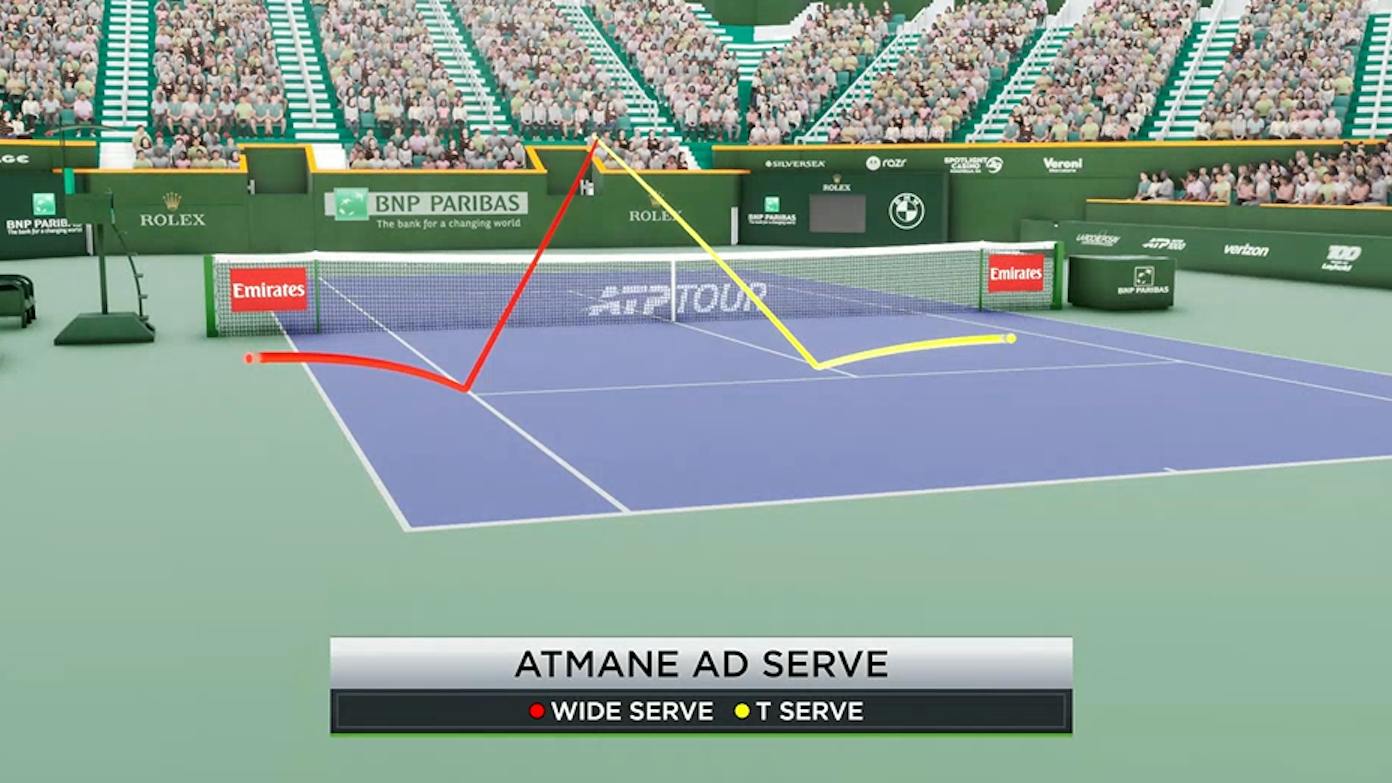
Hawk-Eye has made plenty of great calls over the years. But one of its best decisions wasn't even close.
Twenty years ago, the emerging technology needed innovative tournaments to take it into the tennis mainstream and the BNP Paribas Open was a clear-cut choice to be one of its most important proving grounds.
The partners have played into one another’s strengths ever since. The BNP Paribas Open was named ATP Masters 1000 Tournament of the Year 10 times between 2014-2024. Hawk-Eye was acquired by Sony in 2011 and its technology is now used in 25 sports, including by FIFA, the NFL, NBA, MLB and NHL.
"Tennis was a pioneer for Hawk-Eye,” said Marco Lorenzi, Head of Brand and Marketing, Sony Sports. “Long before technology became standard in high-profile sporting events, the support of forward-thinking partners like Indian Wells created the ultimate blueprint. The trust forged on the tennis court gave global sports the confidence to adopt Hawk-Eye.”
Get 2027 TicketsThe relationship began with storytelling, moved into officiating and is now doubling down on its roots, providing vastly more powerful data to help broadcasters better engage new and existing fans to grow the game.
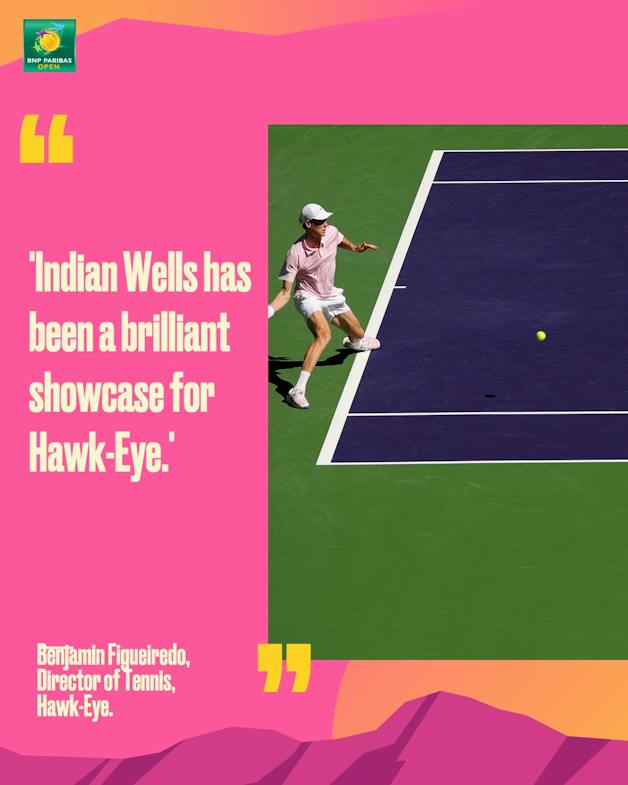
“Being willing to adopt technology and new ideas has made Indian Wells a brilliant showcase for Hawk-Eye,” says Benjamin Figueiredo, Director of Tennis, Hawk-Eye.
“As a dedicated tennis site operating year-round, they became a fantastic partner for developing the infrastructure we needed to improve our systems year after year. We've used Indian Wells as a case study with other tournaments.”
The BNP Paribas Open gave Hawk-Eye a prestigious global stage, a permanent tennis campus and a willingness to test the limits of what technology could bring to the sport. Hawk-Eye, in return, helped the tournament deliver an increasingly accurate, consistent and sophisticated experience for players, officials, broadcasters and fans.
Along the way, Hawk-Eye has evolved from enhancing television coverage to giving players the opportunity to challenge line judges’ calls and, ultimately, to Live Electronic Line Calling. More recently, Hawk-Eye’s Video Review has allowed officials to settle contentious calls such as double bounces or a player breaking the plane of the net.
The Story Begins
“Data storytelling was where Hawk-Eye began,” says Figueiredo. “Originally Hawk-Eye was a broadcast tool, then it became an officiating tool and now we’ve almost come full circle with Level 3 data to create broadcast products, commercial opportunities and richer fan experiences.”
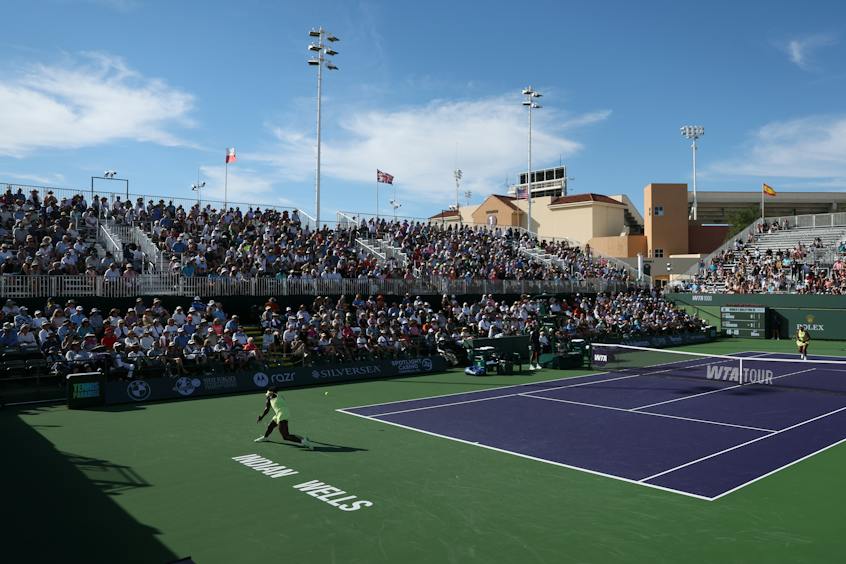
Unlike temporary sites that must be built and dismantled each year, the Indian Wells Tennis Garden is a permanent, purpose-built tennis campus. That has allowed Hawk-Eye to establish dedicated operating spaces, permanent equipment locations and infrastructure that can be refined season after season. That includes Hawk-Eye bunkers inside Stadium 1 and Stadium 2.
“They became a fantastic partner for developing the infrastructure we needed to improve our systems year after year,” Figueiredo says. “Having permanent infrastructure meant we could invest knowing we’d return every year. When we talk to other tournaments, we point to what Indian Wells has done.”
Get 2027 TicketsFull Court Press
The appetite for innovation was on full display in 2011, when the BNP Paribas Open became the first tournament to install the Hawk-Eye challenge system on every match court. The original plan had been more modest, covering only the leading show courts.
Tournament owner Larry Ellison had other ideas.
Ellison pushed for the technology to be available throughout the Indian Wells Tennis Garden and provided the financial backing required to make it happen.
“Larry deserves enormous credit,” Figueiredo said. “Originally we were only planning to cover a small number of courts. Larry wanted the technology everywhere.
“That gave every player the same tournament experience, whether they were playing on Court 7 in the first round or Stadium 1 in the final.”
At the time, the BNP Paribas Open became Hawk-Eye’s largest tennis operation, with eight show courts requiring the company’s full team to travel to the desert.
High Drama
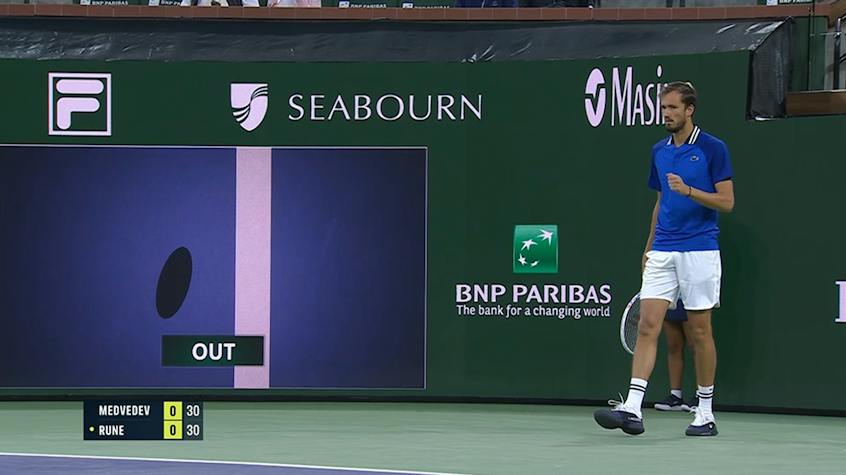
The challenge system also introduced one of the most recognisable pieces of theater in modern tennis. A player requested a review of a close line call, the replay appeared on the stadium screen and fans accompanied the animation with rhythmic clapping as they waited for the verdict.
In or out? Cheers or groans?
Fans made their own guesses as they were brought inside the action. They also empathized with the line judge, whose success in the face of thousands - perhaps millions on TV - could be scrutinized to the millimeter.
Next Set
But technology is always advancing. So even though some fans miss line judges and the drama of the challenge system, live electronic line calling is now the accepted gold standard.
ELC tracks every shot and makes calls automatically in real time, removing the need for players to challenge. On point, the BNP Paribas Open was the first ATP Masters 1000 tournament to introduce the technology across every court, with its established infrastructure helping smooth the transition.
In 2025, the BNP Paribas Open took another step forward as the first ATP Masters 1000 event to deploy Video Review on every court.
Electronic line calling answers one question: Was the ball in or out? Video Review allows officials to examine other potentially decisive moments: Was there a double bounce? Did the ball touch a player? Did a player touch the net?
The technology had previously been used at the Nitto ATP Finals and Next Gen ATP Finals. When late word came that Video Review would be available to Masters 1000 events in 2025, the BNP Paribas Open jumped at the opportunity to lead.
“With short notice, it would’ve been easy for the tournament to say, ‘Let’s wait until next year,’” Figueiredo said. “Instead the attitude was, ‘Let’s make it happen.’ They genuinely want to remain a pioneer.”

Download The Official Event Mobile App
Download the official BNP Paribas Open Mobile App to manage your tickets and follow your favorite players!
Behind the Scenes
For all the permanent infrastructure already in place, delivering that technology still requires considerable preparation.
Approximately 25 Hawk-Eye staff work at the BNP Paribas Open, with the first team members arriving about two weeks before qualifying. Cameras must be mounted, systems calibrated and every court rigorously tested.
Multiple high-performance cameras positioned around courts track positions of balls, players, and rackets with sub-millimeter accuracy using high-frame-rate cameras.
Accuracy is verified to International Tennis Federation standards before the ATP and WTA conduct their own testing and sign off on the system.
Fans can also thank Hawk-Eye and partner Muybridge for HawkVISION, the low-profile camera arrays that capture never-before-seen angles. Through software-driven movement technology, viewers are transported virtually to court level just feet behind the baseline and feel like they are moving in lockstep with players as they hustle from side to side.
Hawk-Eye’s best measure of success might be that most fans never need to think about the operation behind it.
“If we’re doing our job well, nobody talks about officiating,” Figueiredo said. “Beyond accurate officiating, success is about engaging new audiences through data, creating new products and bringing innovation to more tennis courts around the world.”

Deeper Data
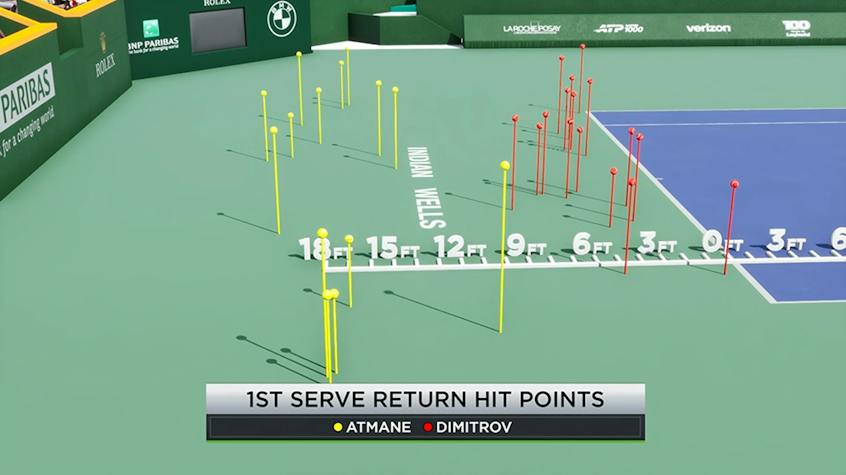
While Hawk-Eye is making calls, it is also collecting what is known as Level 3 Data: detailed ball and player tracking from every rally.
Where was a shot struck? Where did it land? How quickly did it travel? How did each player move around the court?
The answers give broadcasters far more to work with than the score. Analysts can identify tactical patterns, illustrate how players construct points and explain the technical or physical differences shaping a match.
Players and coaches can access the ATP data through Tennis IQ, using it to study their own performances and scout future opponents.
At the 2026 BNP Paribas Open, the tournament also helped Hawk-Eye explore the next wave of tracking technology.
Skeleton Tracking follows 29 points on a player’s body in real time, opening the door to detailed biomechanical analysis of movement and technique.
Hawk AR, another product tested in the background at the BNP Paribas Open this year, overlays live tracking information directly onto broadcast pictures. Ball trajectories, bounce points, shot speeds and distance covered can be placed within the images viewers are already watching, making complex information easier to understand.
Consistent Game Plan
Although the technology has changed, the objective has not.
Twenty years into the relationship, the BNP Paribas Open continues to give Hawk-Eye a high-profile platform for its most ambitious ideas. Hawk-Eye, in turn, helps the BNP Paribas Open remain at the forefront of how tennis is officiated, analysed and presented.
A partnership that began by finding new ways to tell the story of a match went on to change how tennis makes its most important decisions.
Now, powered by the data collected across every court, the tournament and Hawk-Eye continue to find new ways to tell those stories in more compelling ways.
ELC would call it a clear winner.


