Press Conferences
Learner Tien -- March 8
3 Min Read · March 9, 2026
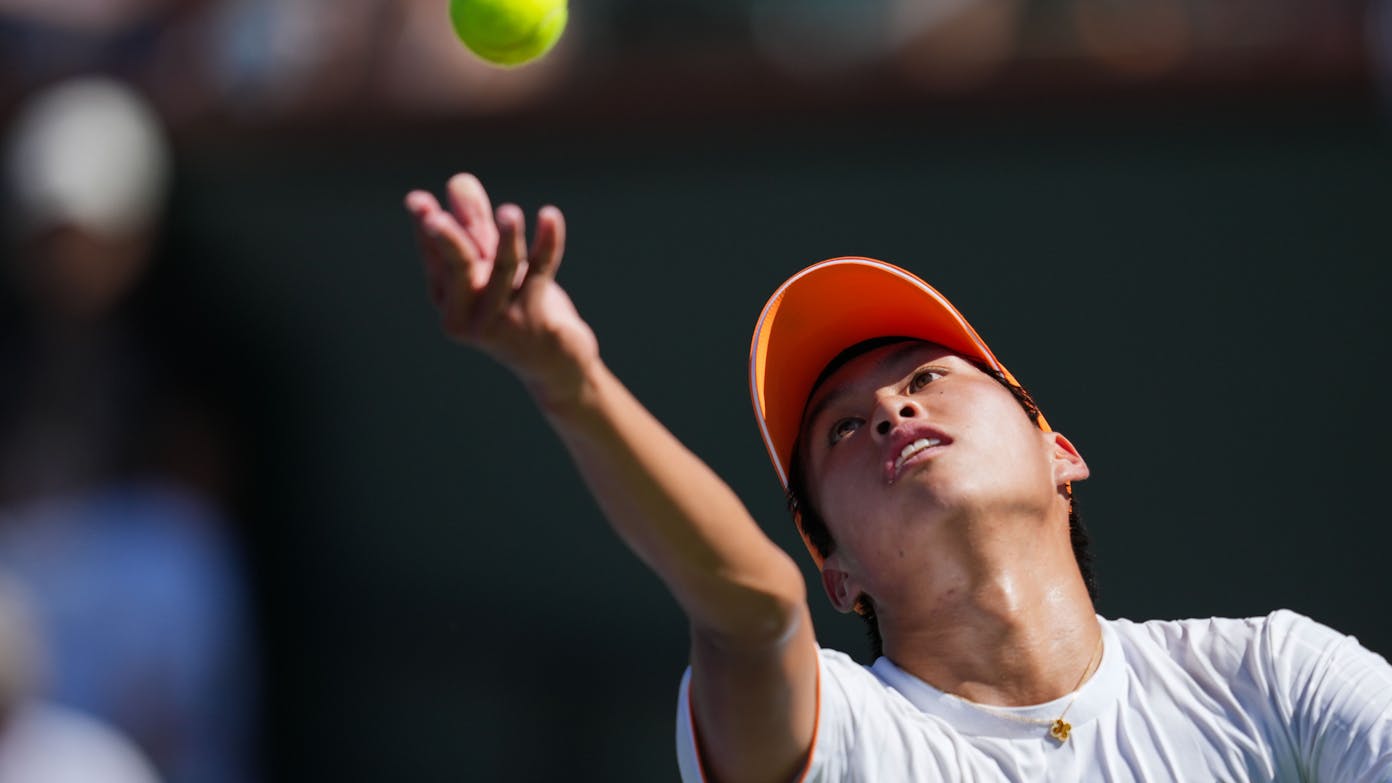
L. TIEN/B. Shelton
7-6, 4-6, 6-3
THE MODERATOR: Learner, congrats on the victory today. Just your overall thoughts on the match.
LEARNER TIEN: Yeah, I mean, tricky match, for sure. Going out there, I heard around that maybe he wasn't feeling that great. You know, it wasn't super surprising to me that he was just taking big cuts, he was going for a lot of balls. Just overall a tough match to navigate.
I think I played the match without having, like, a whole lot of rhythm, just because of how big he was playing. You know, I also felt a little bit of the nerves in some of those points. But just happy to get through.
THE MODERATOR: Questions.
Q. You grew up in Southern California so this, in some ways, is almost like a backyard tournament to you. What does it mean to you to be doing well in your own section of this tournament?
LEARNER TIEN: It means a lot. The court I played on today, I remember exactly where I was sitting in that same stadium when I was a kid, so it's really cool, it's really a full-circle moment for me. Just really special to play here and especially to win here.
Q. When was that moment when you were here? Were you a kid?
LEARNER TIEN: I mean, it was multiple years. It wasn't just one year. But I just remember the exact section of the stadium I was kind of sitting in.
Q. Which one was it?
LEARNER TIEN: From where I was sitting on the bench, it would have been to my left, like in that corner. I remember those seats. I remember a lot of it still. It was really cool.
Q. You're familiar with the term "tennis IQ." A lot of people use it with reference to you as you have been coming up. Do you personally have a definition of what that term actually means, what are the key components of it? Do you feel like it's a weapon for you, that it's actually helping you win points, games, matches out there?
LEARNER TIEN: For sure. I mean, I think it's a big part of my game. If I had to define it, I would say it's a lot of problem-solving, a lot of adjusting, which is, you know, both of those things are huge parts of tennis.
You know, both guys go out and prepare to play a match a certain way. They have a game plan. But from the first point, you're pretty much adapting to what the other guy throws at you. So I think I'd say tennis IQ is navigating that. Just could be a shot selection, it could be where you serve from, what you expect, how you're just navigating the points, I'd say.
Q. I wonder how you're finding it, playing these matches and now going deeper. It's your second year. You're more of a favorite. How are you enjoying that? How are you thriving with that pressure?
LEARNER TIEN: It's different, for sure. I mean, whether I'm a favorite or whether I'm an underdog, I go out, and I don't really think about it. I think once the match starts, like I said, you're just out there trying to adapt to what's happening.
Rankings and previous matches go out the window. You're just trying to work through the current match. Whether I'm a favorite or whether I'm not, I just go out there and I just try to compete as hard as I can.
Q. What about during the match? Do you find it changes if you've got the lead or if you're trailing? Sometimes we see players play more freely when they're behind.
LEARNER TIEN: Yeah, I mean, it's hard to say, how you don't loosen up a bit if you're down a double break or something.
But, I mean, I try to approach each point like it has equal value, and I feel like that sometimes helps take the nerves away off of some of these big points, big games, when I just try to think of each point as, you know, having equal value. And I just try to navigate through these games without thinking of the overall score.
But it's hard to sit here and say that, like some moments in the match don't feel more important than others.
Q. You're not done with tennis today. You're playing with Daniil Medvedev in doubles against the cousins. How did that partnership come together, like why did you want to play? Like, who approached who? Have you practiced together? What's the doubles relationship like?
LEARNER TIEN: His coach reached out to my coach. Originally, a couple guys had asked me to play doubles, and my coach actually didn't really want me to play doubles. He just kind of wanted me to focus on singles.
But when Daniil asked, it was more like -- obviously we're both singles players and we're not really prioritizing doubles, so it wasn't going to be something that would really get in the way of singles, is what we thought. I thought it would be fun, so I said yes.
But obviously he was coming in a little bit late, and I haven't actually seen him in person on-site yet, so I'll probably find him sometime before the match, I'm sure.
Q. Coming back to Southern California, how did growing up in a section or area like this help you really sharpen your skills as a tennis player?
LEARNER TIEN: Yeah, I mean, I consider myself lucky to grow up in this area. There's a lot of tennis, a lot of tennis courts, a lot of tennis players, a lot of parents just putting their kids into tennis programs. There were a lot of tournaments around. I wouldn't have to travel that far most of the time, and it wasn't that hard finding practice, finding open courts.
I consider myself pretty lucky to have grown up in this area.
Q. I notice you out-aced Ben today. Obviously he wasn't his best. But you also hit 10 double faults, 15 aces. Wondering if you're consciously trying to go for more on your serve and how that plays into your strategy?
LEARNER TIEN: I think just this match in particular, I felt like, obviously, physically he wasn't feeling amazing, so he was probably trying to keep points short, trying to take big swings, big cuts off of my serve.
I was going for a good bit, maybe a little bit more than usual, especially on some of the second serves, just because I felt the pressure a little bit of him taking some pretty big cuts at the ball.
In general, I think my serve has improved. Obviously there were some moments where I still feel like I can get much better, but I'm happy with how it's progressed, and I'm definitely seeing a lot more free points, I'd say, off of it.
Q. When you were coming up, was there any players who stylistically influenced you? How much do you use analytics or video analysis either of your matches or the opponent?
LEARNER TIEN: I wouldn't really say there was, like, one guy I tried to mold myself after. I know I personally have no ego issues when it comes to picking and stealing things from other people's games that I think are better than the shots that I hit.
So I think that's been great for me. You know, when I was growing up, my coaches would pick and choose random shots from certain players. I'd just execute that shot very well and try to apply it to me.
That was the main thing. I forgot the second part of your question.
Q. Analytics or video. Do you use that at all for preparation?
LEARNER TIEN: I think my coach does maybe a little bit more now. Me personally, like, I'm not really looking myself. I'm sure my coach does a little bit before we step on court, and he'll tell me some of these stats or what he sees, but personally, I don't really look at that stuff.