Article
Alexander Zverev: Destiny Fulfilled
4 Min Read · June 17, 2026
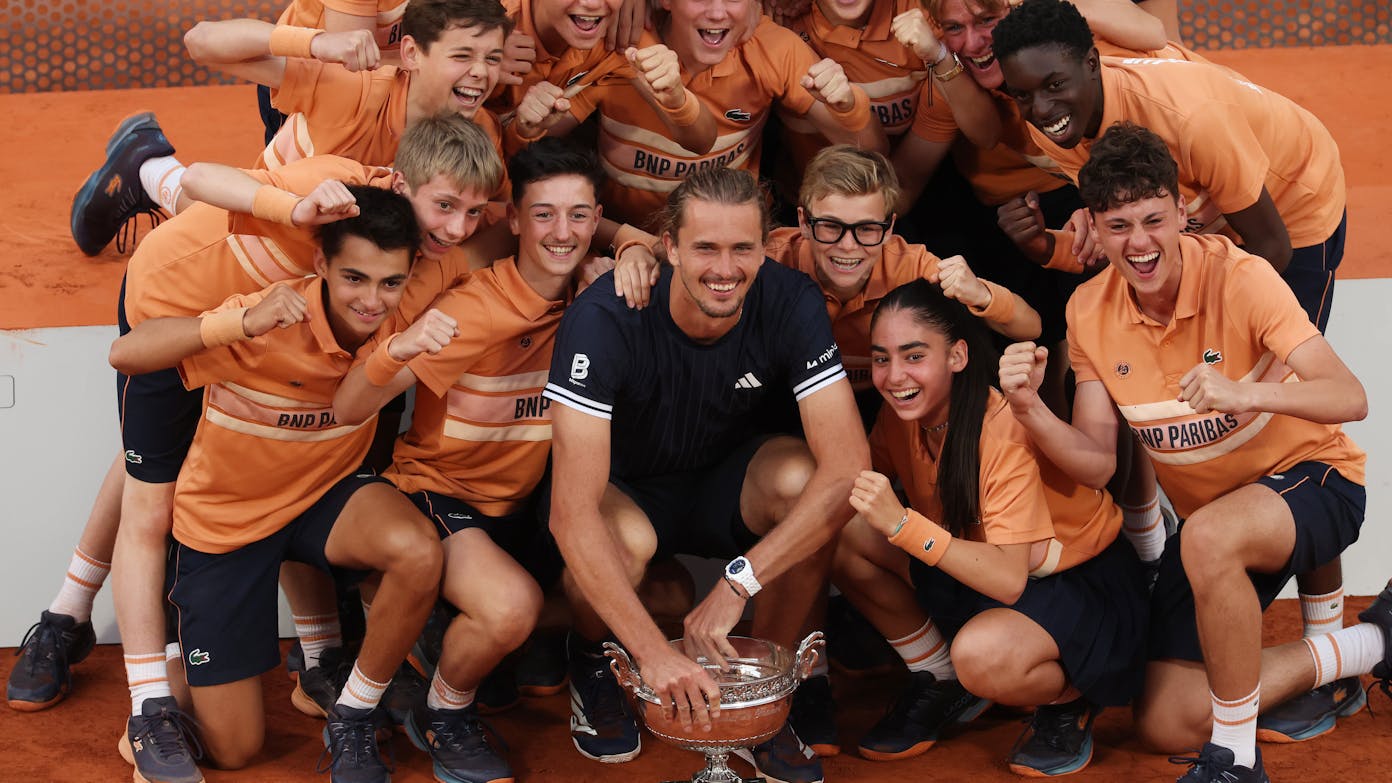
Alexander Zverev was at risk of becoming tennis’ ‘almost man’, at least at Grand Slam level.
Despite being one of the biggest talents of his generation, the German found himself without a major title at 29, due in no small part to unfortunate timing. Early in his career, he battled for Grand Slam scraps amid the Big 3 domination of Novak Djokovic, Rafael Nadal and Roger Federer.
Now in the second half of his career, Zverev is contending with Carlos Alcaraz and Jannik Sinner, who had greedily gobbled up nine consecutive majors heading into Roland Garros.
But that all changed earlier this month when - four years after his catastrophic ankle injury while playing Rafael Nadal in the Roland Garros semi-finals - Zverev returned to Court Philippe-Chatrier to claim his first major against Italian Flavio Cobolli in his 41st major outing.
2027 Series PackagesThree months earlier, Zverev’s run in Tennis Paradise encapsulated the broader theme bedeviling recent seasons: consistently making deep runs at big events, only to be thwarted by Alcaraz or Sinner.
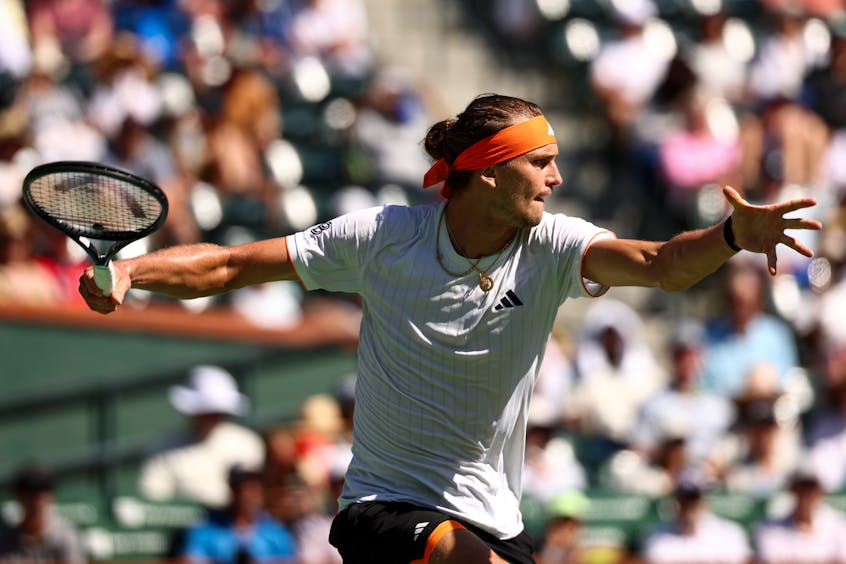
Leaning on his big first serve and embracing the desert bounce that saw balls rise perfectly into his backhand strike zone, Zverev produced his best result at the tournament to date. He dropped a combined 12 games to Frances Tiafoe and Arthur Fils in the fourth round and quarter-finals to race to a semi-final showdown with Sinner.
But against the Italian, Zverev’s need to step out of his comfort zone into the court and play aggressively was in conflict with his natural disposition to dig in deep behind the baseline. “He’s fighting his instinct to play conservatively. Sascha Zverev is at war with himself,” said Tennis Channel analyst Jim Courier.
Zverev fell to Sinner 6-2, 6-4 on Stadium 1 and two weeks later also bowed out to Sinner in straight sets in the Miami Open semi-finals.
That's when Zverev turned to those closest to him to reset for the clay-court stretch. His father, Alexander Sr., and brother Mischa lead his coaching team, with his mother Irina also playing a key role — all three are former professional players themselves, and his dog Lovik is a fixture in the player box wherever he travels.
Then there's Marcelo Melo. The Brazilian doubles veteran — 13 years Zverev's senior — has been his closest friend on tour for over a decade, the pair famously bonding over a PlayStation and a sushi dinner in Stockholm back in 2015. Melo was in Zverev's box at Roland Garros to watch his best friend finally break through, just as he'd long predicted he would.
He also drew strength and inspiration from leading athletes in other sports, including Bayern Munich star Manuel Neuer and club legend Thomas Muller, whose departure to Vancouver saw Zverev publicly criticize the club. Zverev, who wore a Bayern Munich shirt onto court in Munich this year, was tickled to see Muller posted a celebratory video after the Roland Garros win.
Zverev is also a huge Miami Heat fan and delighted in meeting NBA legend Jimmy Butler, who now plays for the Golden State Warriors, in Indian Wells this year.
But perhaps the tribute that meant most to Zverev came from longtime friend and rival, Novak Djokovic.
“Sasha, I have known you since you were 10 years old,” Djokovic posted on Instagram. “You were battling on the practice courts with my youngest brother while I was competing against your older brother, Mischa, on the big stage in both junior and pro circuit. I’ve nurtured a respectful and friendly relationship with your entire family for many years…
“Seeing the tears of joy you had together with your parents, brother and other team members made me emotional. I’m happy that you made it and you absolutely deserve this success because you have worked so hard on every front to make it happen. Enjoy it.”
While it’s true that 26th seed Jakub Mensik was the highest-ranked player Zverev beat en route to the title, from the third round the German played with the heavy pressure of being the overwhelming favorite. Given the open draw, anything less than the title would have been seen as a calamity and fueled talk that he would never win a major.
While still a work in progress, Zverev often brought a more aggressive mindset, with a series of bludgeoned backhand winners - often from neutral rally positions - serving as Exhibit A. Yes, there were moments of nerves and uncertainty in the rollercoaster final against Cobolli, but Zverev turned what could have been a soul-destroying five-set defeat after dropping the fourth into a destiny-fulfilled triumph.
“Now no matter what happens, I will always be a Grand Slam champion, and nobody can take that away from me,” Zverev said. “I think this trophy for me is very important, because if I would have lost this one, the self-belief would have gone down a lot. But now that I’ve won it, I feel like I can do it again.”
The Roland Garros triumph was a full-circle moment for Zverev. Four years earlier, playing the best tennis of his life and with the World No. 1 ranking within reach, the German had battled Nadal for more than three hours in a semi-final that was still only in the second set. Moving to his right, his ankle gripped the court when he expected to slide.
Zverev needed a wheelchair to leave the court and missed the rest of the year after surgery that required a plate and screws.
“I’ve had the best moments of my life on this court. I had the worst moment of my life on this court,” Zverev said. “I was laying in that corner over there four years ago with seven broken ligaments and two fractured bones. I lost a Grand Slam final here two years ago. But now finally it’s a happy end.”


